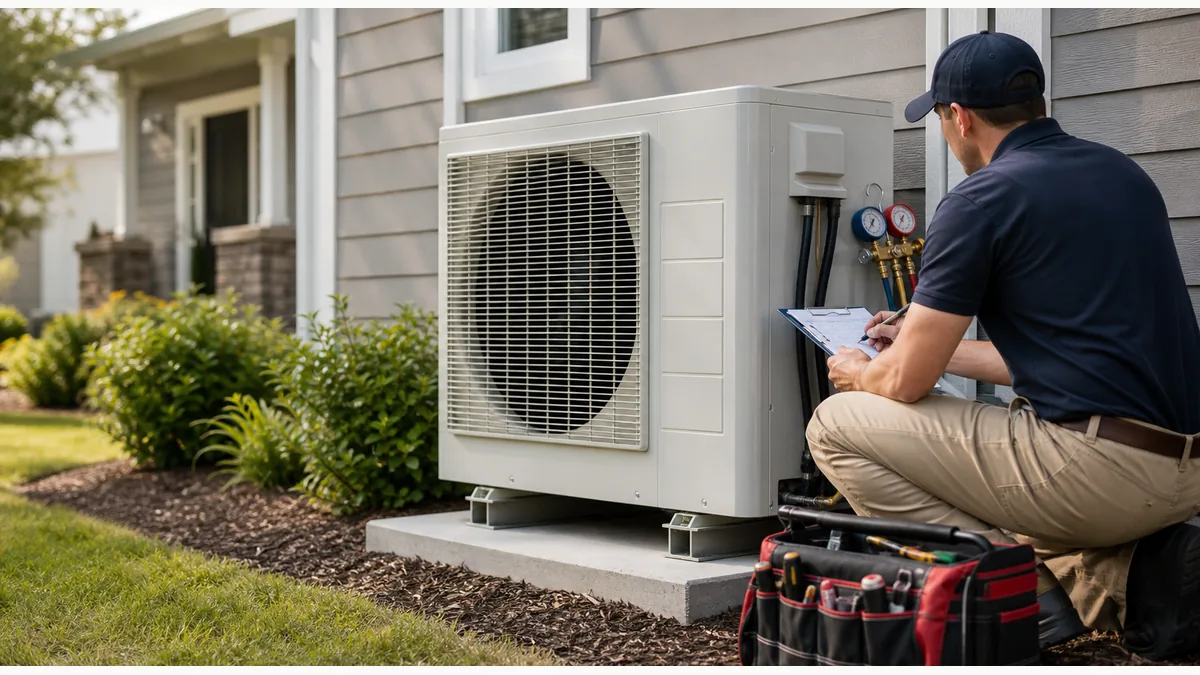
One system can provide heating and cooling
An air-source heat pump moves heat rather than creating heat through combustion or electric resistance alone. In cooling mode, it works like an air conditioner by moving heat out of the home. In heating mode, it moves heat into the home from outdoor air.
This dual heating-and-cooling role can be useful when a homeowner is replacing an aging air conditioner, furnace, or full HVAC system. The right design still depends on the home, ductwork, climate, and load calculation.
Efficiency can reduce wasted energy
The Department of Energy describes air-source heat pumps as an efficient heating and cooling option for homes. Efficiency depends on system sizing, installation quality, controls, duct condition, and how the home is used.
Homeowners should review the EnergyGuide label, equipment ratings, and any official program requirements before assuming a model qualifies for a rebate.
Comfort depends on installation details
A heat pump project is not only an equipment purchase. Duct leakage, insulation, thermostat settings, electrical capacity, and system sizing can affect comfort and operating cost.
Before starting, ask whether a load calculation, duct review, permit, or specific equipment documentation is required. Keep proposals, model numbers, efficiency ratings, invoices, and application confirmations organized.
Rebates and tax credits require verification
Local utility rebates may depend on the service address, equipment type, installation date, program budget, and required paperwork. Eligibility is not automatic.
Federal 25C tax credits were available for qualifying heat pump, heat pump water heater, and HVAC projects placed in service through December 31, 2025. Federal tax credit availability for 2026 and beyond may have changed. Always verify current rules directly with the IRS at irs.gov before making purchasing decisions.