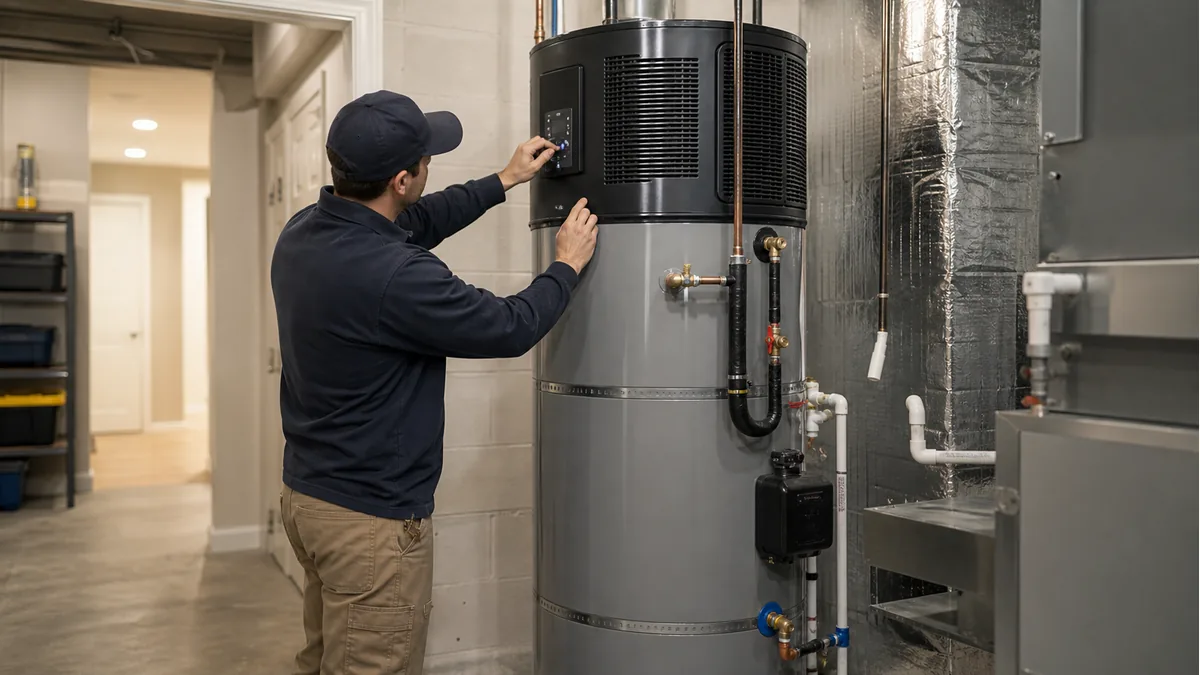
Heat pump water heaters use a different process
A heat pump water heater extracts heat from the surrounding air and transfers that heat into water stored in the tank. This is different from a standard electric resistance water heater, which creates heat directly.
ENERGY STAR describes heat pump water heaters as a high-efficiency option and notes that certified models use much less energy than standard electric models. Actual savings depend on household use, utility rates, installation location, and operating mode.
Installation location matters
Because the unit draws heat from surrounding air, the room size, airflow, clearance, condensate handling, and access for service can affect performance. Some models may also have sound considerations.
Homeowners should review the manufacturer installation guide and ask whether electrical work, permits, drainage, or ventilation changes are needed before purchase.
Controls can help match household needs
Many heat pump water heaters include operating modes or controls that balance efficiency and hot water recovery. The right mode can depend on household size, peak use times, and comfort expectations.
If a utility offers time-of-use rates or demand-response options, homeowners should verify program details directly with the utility before relying on expected savings.
Rebate paperwork should be saved early
Local programs may ask for ENERGY STAR certification, model numbers, invoices, installation dates, service address information, and proof of payment. Some programs may require pre-approval or a filing deadline.
Federal 25C tax credits were available for qualifying heat pump, heat pump water heater, and HVAC projects placed in service through December 31, 2025. Federal tax credit availability for 2026 and beyond may have changed. Always verify current rules directly with the IRS at irs.gov before making purchasing decisions.