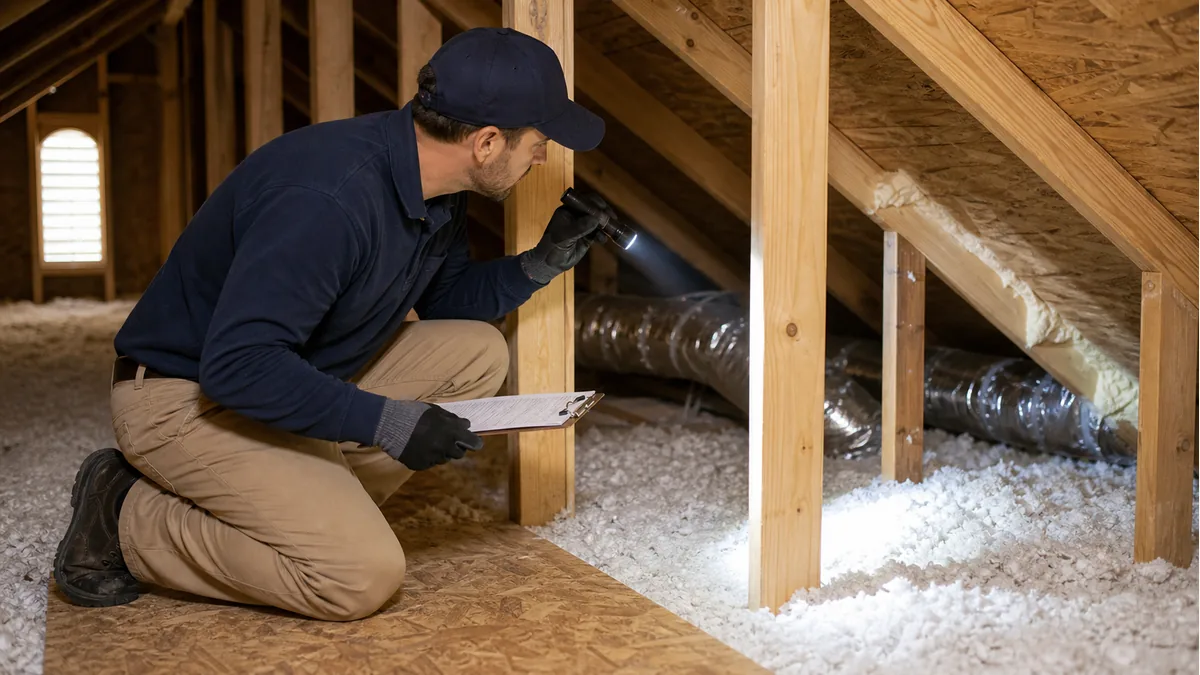
Insulation slows heat flow
The Department of Energy explains that insulation provides resistance to heat flow and can lower heating and cooling costs. Proper insulation can also improve comfort.
The right insulation approach depends on the part of the home being improved, existing conditions, climate, moisture concerns, and whether professional installation is needed.
Air sealing can support efficiency and comfort
Air leaks can let conditioned air escape and outdoor air enter. Sealing leaks before or alongside insulation work can help reduce wasted heating and cooling effort.
Homeowners should ask whether an energy assessment, blower door test, or moisture review is appropriate before starting larger insulation projects.
Insulation can affect HVAC planning
A better-insulated and better-sealed home may have different heating and cooling needs than the same home before improvements. This can matter when comparing HVAC replacement options.
If planning HVAC replacement and insulation work together, ask whether project sequencing, load calculations, or rebate documentation should be handled in a specific order.
Verify incentive requirements before work begins
Some programs may require specific R-values, installed areas, contractor documentation, photos, inspections, or an energy assessment. Do not assume that any insulation project qualifies automatically.
Keep proposals, product details, invoices, photos, permits when relevant, and official application confirmations.